
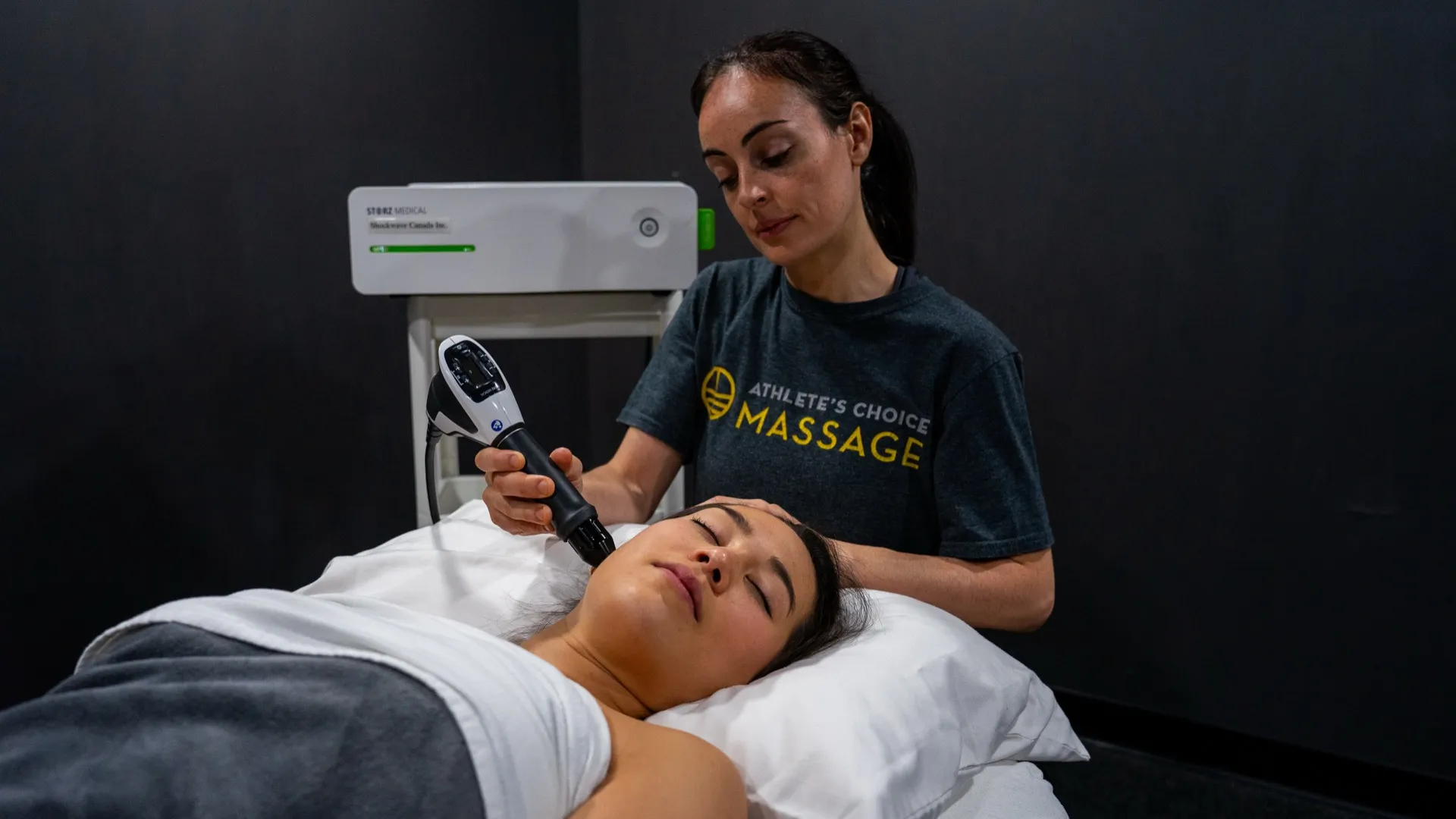
Non-Invasive Shockwave Treatment
Shockwave Therapy Edmonton
Book NowShockwave therapy in Edmonton for plantar fasciitis, Achilles tendinopathy, tennis elbow & rotator cuff pain. Direct billing. 4 locations. Book online.
Non-invasive & drug-free
Acoustic pressure waves stimulate the body's natural healing response without needles, surgery, or medication.
Clinically proven
Supported by peer-reviewed research for chronic tendon conditions — particularly where other treatments have failed.
Fast treatment sessions
Most sessions take 10–15 minutes. Many patients see significant improvement within 3–5 sessions.
Shockwave Therapy Edmonton
If you have been dealing with a tendon injury or chronic pain that has not responded to rest, massage, or other conservative care, shockwave therapy may be the next step. It is one of the few non-invasive treatments that can directly address the tissue-level changes behind stubborn musculoskeletal conditions — particularly tendons, which heal slowly because of their limited blood supply.
At Athlete’s Choice Massage, shockwave therapy is available across all four Edmonton-area clinics. Your first appointment begins with an assessment so your therapist understands your condition, how long you have had it, and what has and hasn’t worked. Treatment is then tailored to your tolerance and adjusted in real time.
30 min | 45 min | 60 min
- 780-433-0550
- Open daily, Edmonton, Alberta
- Direct Billing Available
Conditions We Treat With Shockwave Therapy
Plantar Fasciitis
Plantar fasciitis is one of the most common reasons people book shockwave therapy in Edmonton. The plantar fascia — the thick band of tissue running along the bottom of your foot — becomes irritated and inflamed, causing sharp heel pain that is usually worst first thing in the morning or after periods of rest. When the condition becomes chronic, the tissue undergoes structural changes that make it resistant to standard treatment. Shockwave therapy targets this directly, stimulating circulation and cellular repair in tissue that has lost its normal healing capacity.
Achilles Tendinopathy
Chronic Achilles pain — whether at the tendon’s midpoint or where it inserts into the heel — responds well to shockwave therapy. Tendinopathy develops when the tendon’s collagen structure degrades over time, typically from repetitive loading without adequate recovery. Shockwave therapy stimulates a controlled healing response in the degenerated tissue, making it an effective option when stretching and strengthening alone have not resolved the pain.
Tennis Elbow and Golfer’s Elbow
Lateral epicondylitis (tennis elbow) and medial epicondylitis (golfer’s elbow) are both tendon overuse injuries at the elbow, and both are well-supported indications for shockwave therapy. These conditions are common in people who do repetitive gripping, lifting, or computer work — not just racket sports. If elbow pain has persisted for more than a few months and is limiting your grip strength or daily function, shockwave therapy is worth discussing with your therapist.
Calcific Shoulder and Rotator Cuff Tendinopathy
Calcium deposits in the rotator cuff tendons cause a specific type of shoulder pain that can be severe and difficult to treat conservatively. Shockwave therapy is effective at breaking down these calcifications and stimulating the surrounding tendon tissue. It is also used for rotator cuff tendinopathy without calcification — particularly when shoulder pain has persisted through physiotherapy or massage and range of motion remains limited.
Patellar Tendinopathy
Patellar tendinopathy — commonly called jumper’s knee — causes pain at the base of the kneecap where the patellar tendon attaches. It is most common in people who run, jump, or squat regularly, but it also develops in people who are on their feet for long periods. Shockwave therapy promotes tendon remodelling and is typically combined with a guided loading program from your therapist to support lasting recovery.
Chronic Trigger Points and Myofascial Pain
Trigger points that have not responded to manual therapy can be treated with shockwave therapy, which disrupts the contracted muscle fibres and improves local circulation. This is particularly useful for persistent neck, upper back, and hip pain where multiple treatment attempts have produced only temporary relief.
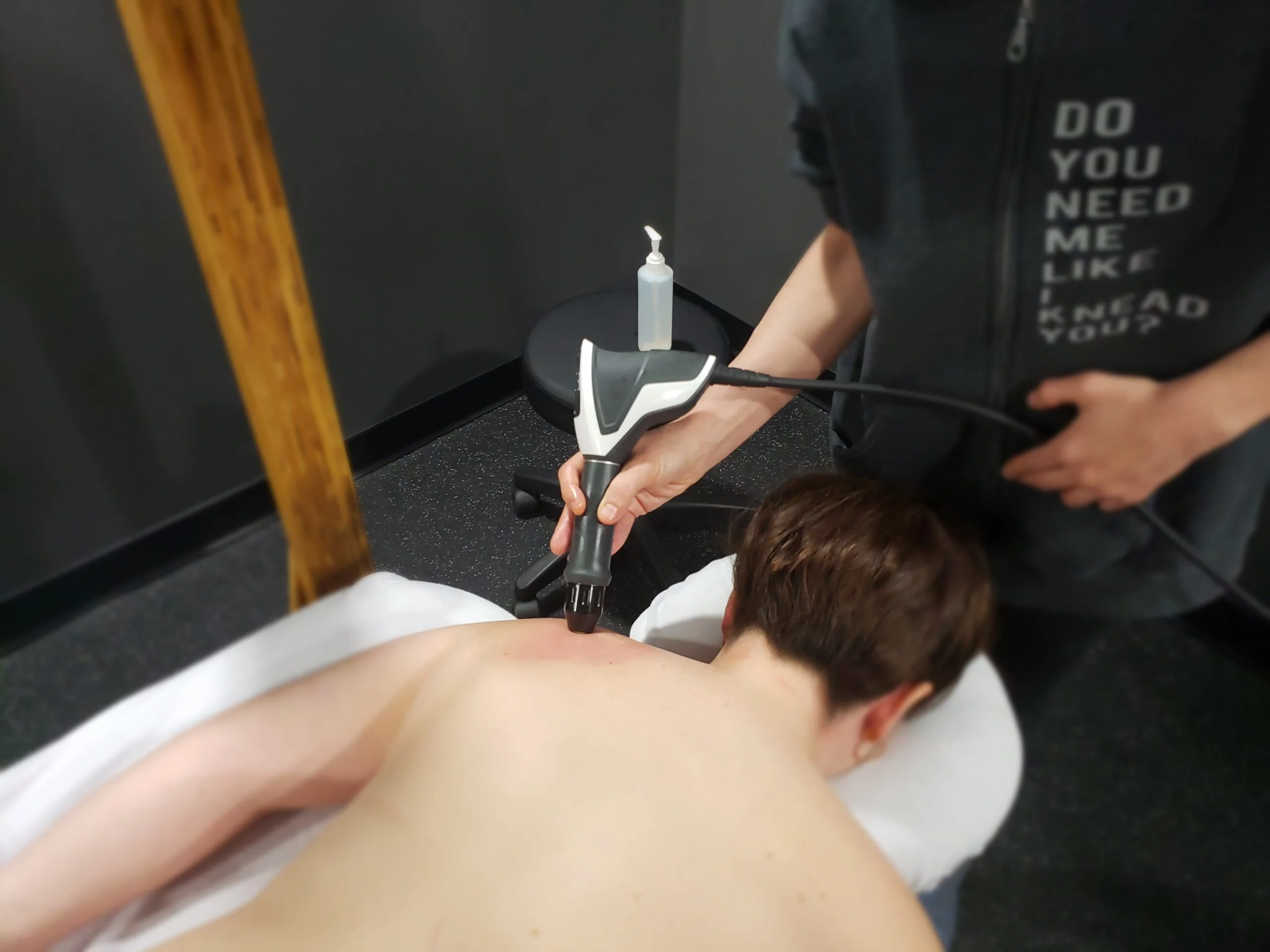
What to Expect at Your Appointment
Your appointment starts with an assessment — your therapist will review your health history, test range of motion, and identify the specific tissue involved before any treatment begins. This is not a formality; it shapes how the shockwave is applied and at what intensity.
During treatment, a conductive gel is applied to the area and a handheld probe delivers targeted acoustic waves to the affected tissue. The sensation is a deep, repetitive pressure — most clients describe it as intense but tolerable. Your therapist adjusts the intensity throughout the session based on your feedback.
After the appointment, mild soreness in the treated area is normal for one to two days. Your therapist will give you specific guidance on activity, loading, and any exercises that support recovery between sessions. Most conditions respond within three to six sessions, spaced approximately one week apart.
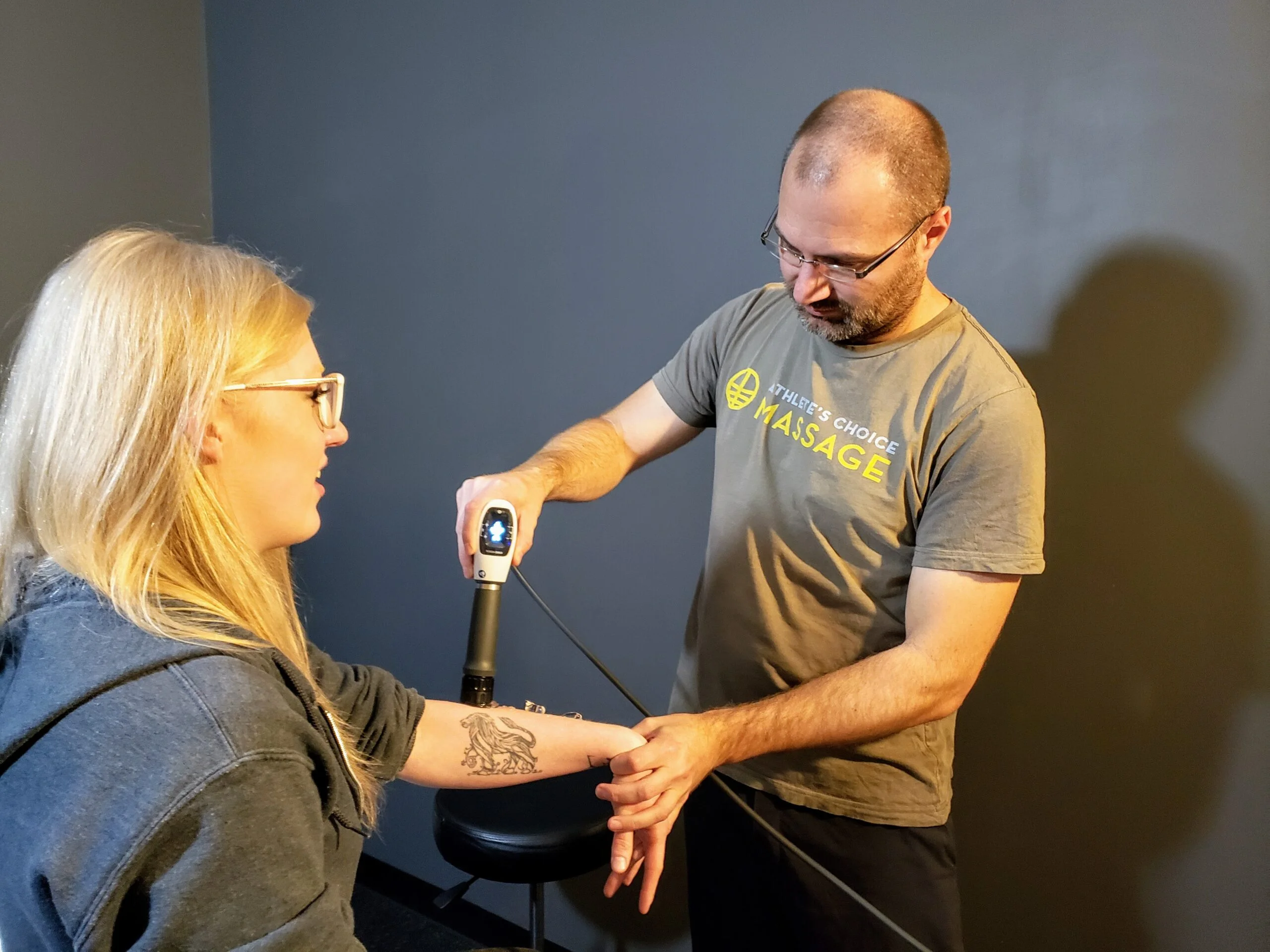
Important Things to Know Before Your Visit
Come prepared to discuss your history. The more your therapist knows about when the pain started, what aggravates it, and what you have already tried, the more targeted the treatment can be.
Wear clothing that allows access to the area. Shockwave is applied directly to skin with gel. Shorts, a tank top, or loose layers work well depending on the treatment area.
Avoid anti-inflammatory medication before your appointment if possible. Shockwave therapy works by triggering an inflammatory healing response — NSAIDs taken before treatment can blunt this effect.
Ease back on intense activity the day after treatment. Some post-treatment soreness is part of the process. Give the tissue 24 to 48 hours before returning to heavy loading.
If you are pregnant, have active cancer, a pacemaker, or an open wound or fracture in the treatment area, let your therapist know before booking. These are contraindications for shockwave therapy.
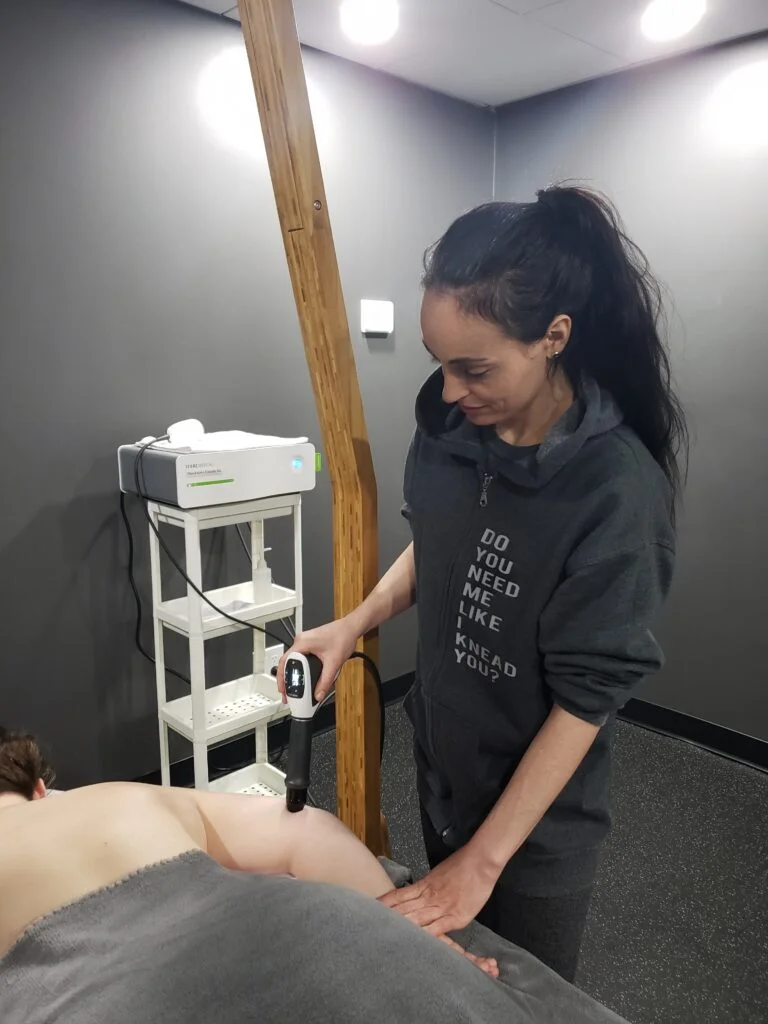
Shockwave Therapy Locations in Edmonton
Shockwave therapy is available across all four Athlete’s Choice Massage clinics in the Edmonton area:
- West Edmonton — Stony Plain Road, near West Edmonton Mall
- Downtown Edmonton — serving the core and surrounding neighbourhoods
- Old Strathcona — south side of the river, Whyte Ave area
- Sherwood Park — Broadmoor Boulevard, Emerald Hills
Direct billing is available at all locations. Book online or call 780-433-0550.
Frequently Asked Questions
What is shockwave therapy and how does it work?
Shockwave therapy uses targeted acoustic pressure waves to stimulate the body’s natural healing response in areas of chronic pain and tissue breakdown. It increases blood flow, breaks down calcifications and scar tissue, and promotes cellular repair — particularly effective for tendons and connective tissue that have poor circulation and heal slowly on their own.
What conditions does shockwave therapy treat?
It is most commonly used for plantar fasciitis, Achilles tendinopathy, lateral epicondylitis (tennis elbow), medial epicondylitis (golfer’s elbow), calcific shoulder tendinitis, rotator cuff tendinopathy, patellar tendinopathy (jumper’s knee), and chronic myofascial trigger points.
Does shockwave therapy hurt?
Most clients feel a deep, pulsing pressure during treatment — intensity is adjusted to your tolerance throughout the session. Mild soreness in the treated area is common for one to two days afterward as the tissue responds and begins to repair.
How many sessions will I need?
Most conditions respond well within three to six sessions, typically spaced one week apart. Your therapist will recommend a treatment plan at your first appointment based on your specific condition, how long you have had it, and how your tissue responds.
Do you offer direct billing for shockwave therapy?
Yes. Direct billing is available at all four Edmonton-area locations. Bring your insurance details and we will submit on your behalf.
What to know
Before Your Visit
Arrive Early
A few minutes before your appointment lets you complete paperwork and settle in before treatment begins.
Eat Light
Avoid heavy meals for 1–2 hours beforehand. A light snack is fine — an empty stomach can cause lightheadedness.
Stay Hydrated
Drink water before and after. Hydration helps flush out waste released during treatment and reduces post-session soreness.
Dress Comfortably
Wear loose-fitting or athletic clothing that allows free movement. Your therapist will advise on draping based on your treatment.
Communicate
Share your concerns, injuries, and goals before the session starts — and keep the dialogue open throughout so adjustments can be made in real time.
Rest After
Skip intense activity after your session and give your body time to integrate the treatment.
Follow Aftercare
Your therapist may prescribe specific stretches, exercises, or self-care strategies. Following through ensures the best long-term results.
Medical Clearance
If you are pregnant, undergoing cancer treatment, or recently injured, consult your healthcare provider before booking. Your safety comes first.
What we treat
Conditions
We Treat
Most of our clients aren't athletes. They're people with persistent pain who've tried stretching and rolling and want something that actually works. If your condition isn't listed, call us — your therapist will assess at your first visit.
Book Your AssessmentGoogle reviews
What Our Clients Say
"I had an excellent experience with my massage therapist Ece Taylan. She created a calm, welcoming atmosphere that immediately put me at ease and the treatment was exceptional."
Seray
Google Review
"Marisol is truly an exceptional massage therapist! She made me feel comfortable, welcomed, and completely cared for. I left feeling lighter, relaxed, and with improved mobility."
Lesley Turnbull
Google Review
"Rebecca is very knowledgeable and caring. She takes the time to listen to your concerns and offers a great treatment plan. She has a great touch."
Tara Gamble
Google Review
"Tanya D. is amazing!! I've had chronic neck/back issues for close to 20 years, and have never had the type of relief as I've had since seeing her over the past year."
Kaila Tipton
Google Review
Got questions?
FAQ
What does shockwave therapy feel like?
You'll feel a rapid tapping or pressure sensation — sometimes uncomfortable in tender areas. The intensity is adjustable and the sessions are short. Most patients find it very manageable.
How many sessions will I need?
Most conditions respond to 3–5 sessions spaced one week apart. Your therapist will assess progress after each treatment and adjust accordingly.
Is shockwave therapy effective for plantar fasciitis?
Yes — plantar fasciitis is one of the most well-researched applications for shockwave therapy. Clinical studies show significant pain reduction and functional improvement, particularly in chronic cases.
Who is shockwave therapy not suitable for?
Shockwave is not recommended during pregnancy, over active growth plates in children, over pacemakers or implanted devices, or in areas with active infection or circulation disorders. We screen for contraindications before every session.
Is shockwave therapy covered by insurance?
Coverage varies by plan. Some extended health benefits cover shockwave when performed by an RMT or physiotherapist. We recommend checking with your provider. Payment is due at time of service and we provide receipts for self-submission.