
Conditions We Treat
Plantar Fasciitis Treatment in Edmonton | Athlete’s Choice Massage
Book NowPlantar fasciitis treatment in Edmonton — shockwave therapy plus targeted RMT massage for chronic heel pain. 4 locations, direct billing. Book online.
That sharp pain in your heel with the first steps of the morning — plantar fasciitis is one of the most common and most persistent foot conditions we treat. For chronic cases, shockwave therapy is our main treatment: it’s one of the most evidence-supported options for plantar fasciitis, and we pair it with targeted massage and a home-care plan to address the calf tightness driving the problem. If you’re looking for plantar fasciitis treatment in Edmonton, here’s how it works and how to book at Athlete’s Choice Massage.
What is plantar fasciitis?
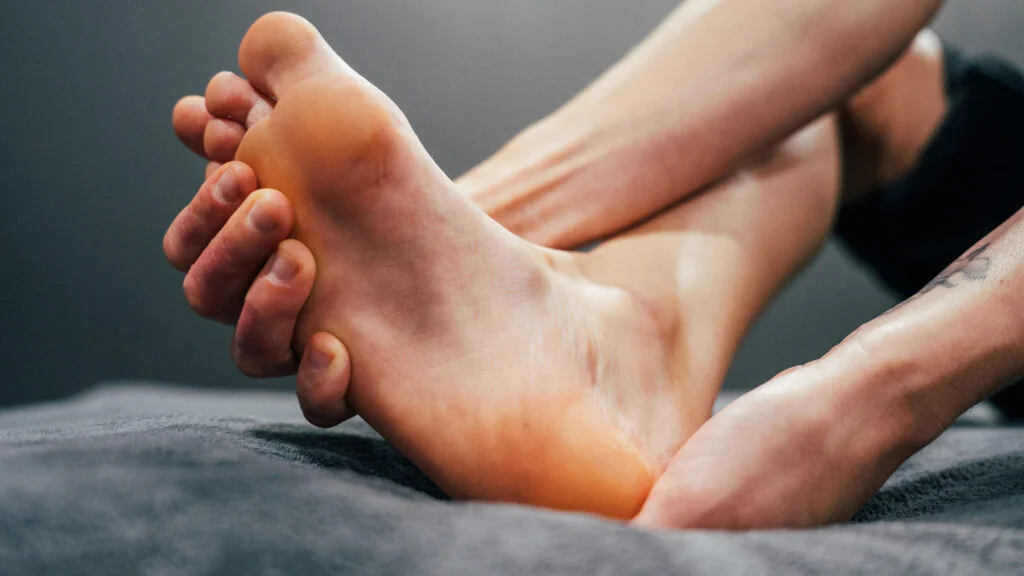
The plantar fascia is a thick band of connective tissue running along the bottom of your foot, connecting your heel bone to your toes. Plantar fasciitis is inflammation and microtearing of this tissue — most commonly where it attaches to the heel. The hallmark symptom is sharp heel pain with the first steps after rest, which typically eases as you walk but returns after extended activity.
It’s most common in runners, people who stand for long hours, and those who’ve recently increased activity levels. Tight calf muscles and Achilles tendons are a major contributing factor — when the calf complex is restricted, it transfers more load to the plantar fascia.
Shockwave therapy: our main treatment for plantar fasciitis
For plantar fasciitis — especially chronic cases that haven’t responded to stretching, orthotics, or hands-on care — shockwave therapy is our primary treatment. It’s one of the most evidence-supported options for the condition: focused acoustic waves stimulate a healing response in tissue that has stopped repairing on its own due to poor circulation, directly at the plantar fascia and its attachment at the heel.
Most clients complete three to six shockwave sessions spaced about a week apart, combined with the calf and foot work below. Shockwave therapy is available at all four ACM Edmonton-area clinics. Book shockwave therapy for plantar fasciitis →
How massage supports your treatment
The key insight most people miss: effective plantar fasciitis massage isn’t just about rubbing the sore heel. The calf, Achilles, and intrinsic foot muscles all contribute to how much tension loads the plantar fascia. Treatment that only targets the bottom of the foot gets limited results. Our RMTs work across the full kinetic chain:
- Deep tissue work on the gastrocnemius and soleus (the calf complex) to reduce tension pulling on the heel
- Achilles and plantar fascia release to address the fascia directly
- Intrinsic foot work — the small muscles of the foot that support arch mechanics
- Assessment of contributing factors up the chain (hip flexors, hamstrings) if indicated
ACM’s deep tissue massage service includes strong lower leg and foot work, making it particularly suited to plantar fasciitis presentations.
Self-care between sessions: the tennis ball approach
Rolling the plantar fascia with a tennis ball (or lacrosse ball for more pressure) is one of the most effective home-care tools for this condition. Done correctly, it provides meaningful relief between massage sessions and helps maintain gains.
How to do it: Place a tennis ball under your bare foot while seated. Apply moderate pressure and slowly roll it forward and back along the arch, pausing on tender spots for 5–10 seconds. Spend 2–3 minutes per foot, once or twice daily. Morning sessions before your first steps are particularly useful — the fascia is most restricted after sleep.
How long to roll: 2–3 minutes per foot per session is enough. Longer sessions don’t improve outcomes and can aggravate the tissue if overdone. Consistent short sessions beat occasional long ones.
Calf stretching (both gastrocnemius and soleus) should accompany the ball rolling. Your RMT will show you the right technique at your first session.
What to expect at Athlete’s Choice Massage
Plantar fasciitis sessions at ACM typically run 45–60 minutes. Your RMT will assess the foot and lower leg, work through the calf and Achilles before addressing the plantar surface directly, and provide a home-care plan including the rolling and stretching protocol.
Most clients notice improvement within 2–3 sessions. For long-standing plantar fasciitis (6+ months), more sessions are typically needed before the pattern breaks. Your RMT will give a specific recommendation after your assessment.
Book plantar fasciitis massage in Edmonton
ACM has four Edmonton-area locations. Direct billing is available to most major insurance providers at all locations.
- West Edmonton — Near West Edmonton Mall and Stony Plain Road — Book online
- Old Strathcona — Near Whyte Ave and the U of A — Book online
- Downtown Edmonton — Central business district — Book online
- Sherwood Park — Strathcona County, east of Edmonton — Book online
ACM also offers a dedicated plantar fasciitis massage page for Sherwood Park with location-specific information.
Frequently asked questions
How long does plantar fasciitis take to heal?
With consistent treatment and home care, most plantar fasciitis cases improve meaningfully within 6–12 weeks. Cases that have been present for over a year can take longer. The key is addressing the calf tightness driving the problem — not just treating the heel in isolation.
Should I rest completely with plantar fasciitis?
Complete rest isn’t usually recommended. Low-impact movement (cycling, swimming) that doesn’t load the heel maintains fitness without aggravating the fascia. Reducing high-impact activity (running, jumping) while the tissue heals is appropriate, but full rest tends to weaken the supporting structures over time.
Is plantar fasciitis massage covered by Alberta insurance?
Yes — massage therapy is covered under most Alberta extended health plans. ACM offers direct billing at all locations, so your insurer is billed directly.
What’s the difference between plantar fasciitis and a heel spur?
Heel spurs (calcification at the heel bone attachment) often develop alongside plantar fasciitis as a response to chronic tension, but the spur itself isn’t usually the source of pain — the inflamed fascia is. Massage addresses the fascial tension regardless of whether a spur is present, and most people with heel spurs respond well to the same treatment approach.
Can massage help if I’ve had plantar fasciitis for years?
Yes, though chronic cases take longer to respond. Long-standing plantar fasciitis often involves both fascial thickening and significant calf restriction that has built up over time. The approach is the same — work up the kinetic chain, address the calf and Achilles before the foot — but more sessions are typically needed before the pattern breaks.
Not sure where to start? Book a shockwave therapy assessment and your therapist will confirm the right plan — shockwave, hands-on massage, or both — based on how long you’ve had the condition and how it responds.