
FAQ
Cross-Friction Massage: Tendon & Scar Tissue Treatment
Cross-friction massage breaks down scar tissue and treats chronic tendon injuries. 3 Edmonton RMT clinics. Direct billing. Book same-day.
What is cross-friction massage?
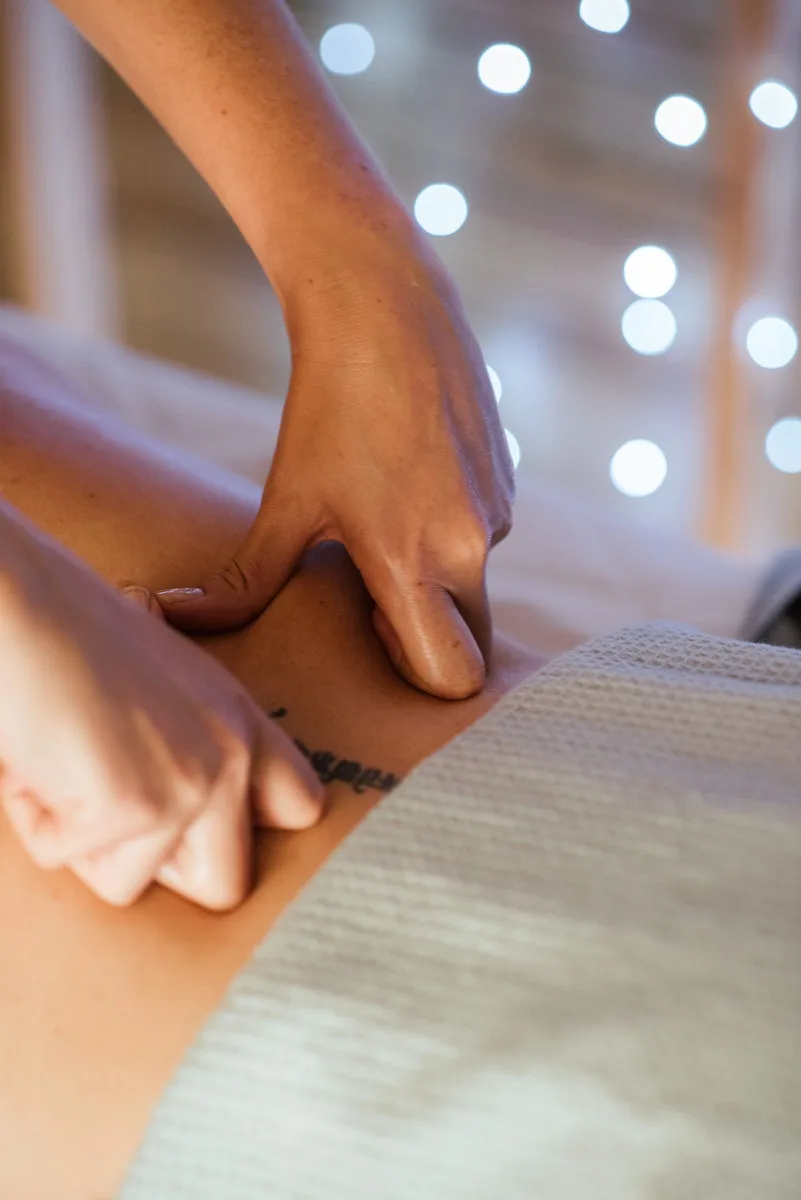
Cross-friction massage is a manual therapy technique that applies pressure perpendicular to the direction of tissue fibers, across the grain rather than along it. The goal is to break down scar tissue, disrupt adhesions, and stimulate better collagen alignment in tendons and ligaments that have healed poorly after injury.
It’s most commonly used for:
- Tendonitis, Achilles, patellar, rotator cuff, wrist extensors
- Scar tissue from old sprains or strains
- IT band syndrome
- Plantar fasciitis
- Chronic soft tissue injuries that haven’t responded to rest alone
The technique was developed by James Cyriax and is standard practice in sports massage and physiotherapy. At Athlete’s Choice, it’s applied by RMTs as part of a deep tissue massage or sport massage session, it’s a focused technique used within a broader appointment, not a standalone service.
How it works on tendon and scar tissue injuries
Tendons don’t heal cleanly. After a partial tear or repetitive strain, the collagen fibers that regrow tend to be disorganized, cross-hatched instead of aligned along the line of stress. That disorganized tissue is weaker, less elastic, and more prone to re-injury.
Cross-friction massage applies controlled mechanical stress perpendicular to those fibers. Over multiple sessions, this:
- Stimulates fibroblast activity, the cells responsible for rebuilding collagen
- Improves circulation to tissue that’s often poorly perfused after injury
- Disrupts mature adhesions that are restricting range of motion
- Desensitizes chronically irritated tissue to reduce persistent low-level pain
It’s not comfortable in the moment. You’ll feel direct pressure at the injury site, often more intense than a standard massage. That’s expected. The soreness that follows is normal and typically resolves within 24-48 hours.
What to expect during a session
Your therapist will locate the exact site of injury through palpation, identifying the specific tendon, ligament, or scar tissue involved, before applying the technique. The cross-friction work typically takes 5-15 minutes within a session; it’s targeted work, not a full-hour technique.
At Athlete’s Choice Massage, this is incorporated into a therapeutic massage or sport massage appointment. Your RMT will assess what’s driving the problem, whether the tendon itself is the issue, or whether it’s compensating for restriction or weakness elsewhere, and build the session around that.
Conditions commonly treated with cross-friction massage
- Rotator cuff tendinopathy, supraspinatus and infraspinatus tendons
- Achilles tendinitis, mid-portion and insertional
- Patellar tendinitis (jumper’s knee)
- Lateral epicondylitis (tennis elbow)
- Plantar fasciitis, combined with other foot and ankle work
- Post-sprain ankle stiffness, residual scar tissue from old ligament injuries
- IT band syndrome, friction point at the lateral knee
For plantar fasciitis specifically, cross-friction at the fascial insertion is often combined with broader foot and ankle work. For rotator cuff issues, it’s commonly paired with shoulder mobilization and postural treatment.
How it fits into a broader treatment plan
Cross-friction works best as part of a targeted session, not in isolation. At Athlete’s Choice, RMTs typically combine it with:
- Deep tissue work to address the surrounding muscle tension driving load on the injured tendon
- Myofascial release to free up restrictions in the broader kinetic chain
- Movement guidance, what to do and avoid between sessions to support recovery
View all Edmonton massage treatments →
Book cross-friction massage in Edmonton
Cross-friction massage is available at all three Edmonton RMT clinics, South Edmonton, Downtown, and West Edmonton. Book a deep tissue or sport massage appointment and note your specific injury in the booking notes. Your therapist will determine whether cross-friction is appropriate and will focus time on the affected tissue.
Direct billing available at all three locations. Same-day appointments often available online.
Frequently asked questions
Does cross-friction massage hurt?
Yes, in the moment, but it should be a productive discomfort, not sharp or unbearable pain. The treatment site will be tender because you’re applying direct pressure to damaged tissue. Mild soreness for 24-48 hours afterward is normal and expected.
How many sessions of cross-friction massage does it take?
It depends on how chronic the injury is and how much scar tissue has built up. Acute tendon injuries may respond in 3-5 sessions. Long-standing injuries with significant adhesion can take 8-12 sessions or more. Your therapist will give you a realistic assessment after the first session.
Is cross-friction massage the same as deep tissue massage?
No. Deep tissue massage works along the length of the muscle using sustained pressure. Cross-friction applies pressure perpendicular to the tissue at a specific injury site. Your RMT may use both in the same session, deep tissue to address the surrounding area, cross-friction at the precise lesion site.
Can cross-friction massage help with scar tissue?
Yes, this is one of its primary applications. Scar tissue formed after soft tissue injury tends to be disorganized and restrictive. Cross-friction massage mechanically disrupts mature adhesions and stimulates better collagen remodeling over time.
Where can I get cross-friction massage in Edmonton?
Athlete’s Choice Massage offers cross-friction massage as part of deep tissue and sport massage sessions at three Edmonton locations, South Edmonton, Downtown, and West Edmonton. Direct billing available. Book online or call (780) 433-0550.
Related Treatments & Conditions