
Professional Massage Therapy
Craniosacral Therapy
Book NowGentle craniosacral therapy in Edmonton & Sherwood Park for relaxation, tension, and headache relief. Light-touch RMT care at Athlete's Choice. Book online.
Registered therapists
All treatments are delivered by Registered Massage Therapists (RMTs) trained to clinical standards.
Personalized treatment
Every session starts with an assessment of your specific concerns, no generic routines.
Direct billing available
We direct-bill most major insurance providers so you can focus on your recovery, not the paperwork.
Watch: What is Craniosacral Therapy (CSTA)
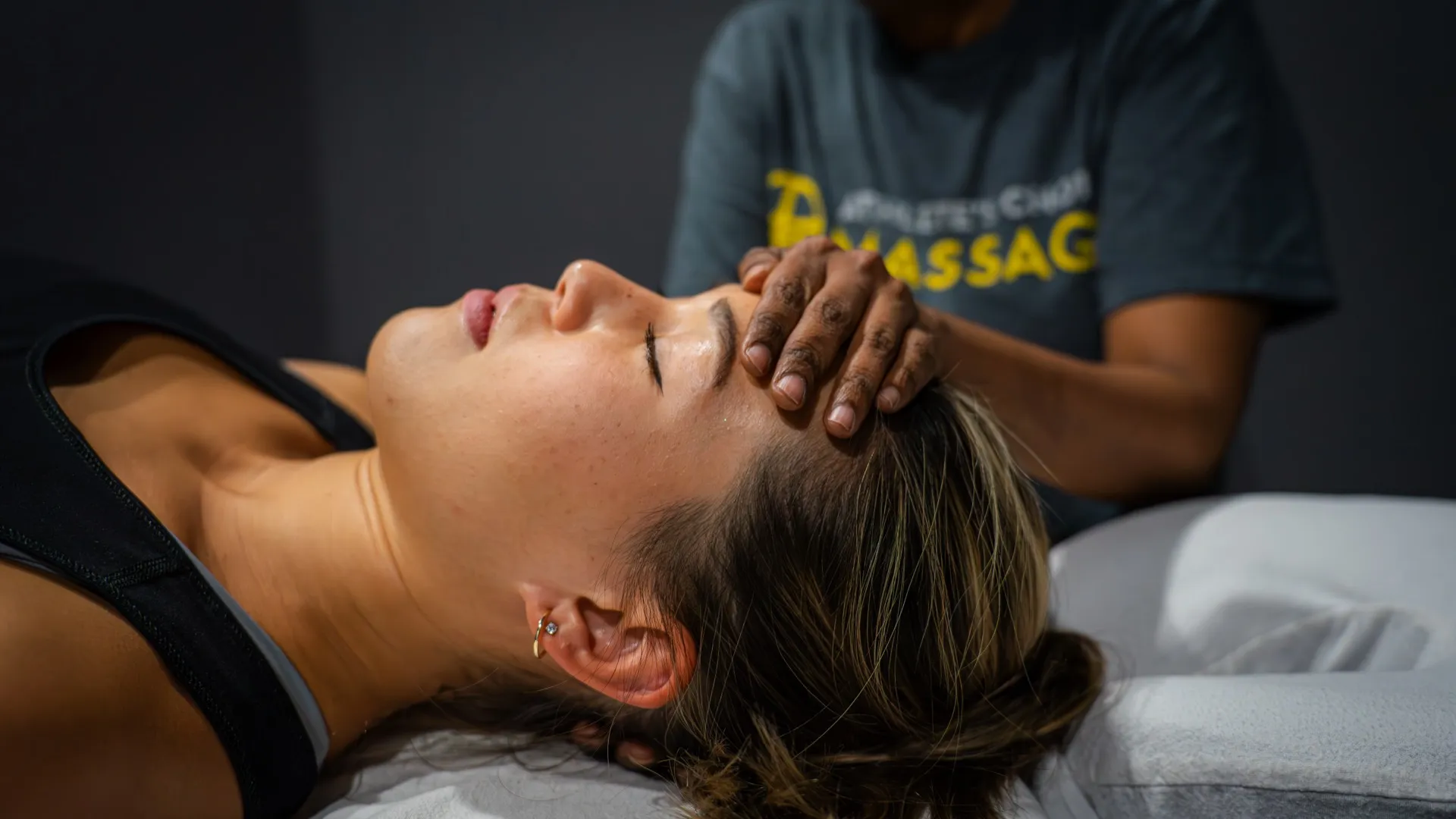
Craniosacral therapy is a very gentle, hands-on technique that uses light touch around the head, neck, and spine to encourage relaxation and ease tension. Clients most often seek it for stress, tension, and headaches or migraines, and for a general sense of calm. It is best understood as a relaxation-focused therapy, and it complements, rather than replaces, medical care for any condition.
What to Expect During Your Craniosacral Therapy Appointment
If you’re looking to address headaches and migraines, stress-related tension, trouble winding down, or a sense of overall imbalance, Craniosacral Therapy may be the right choice for you.
Your appointment will begin with a comprehensive assessment. This includes a discussion of your chief concerns, headache or migraine patterns, relevant health history, stress levels, sleep quality, and any lifestyle factors that may be contributing to your symptoms. Your practitioner will then perform a gentle structural and craniosacral assessment to evaluate subtle restrictions within the craniosacral system and surrounding tissues. Together, you’ll establish clear treatment goals to ensure the session is calm, focused, and aligned with your needs.
Based on the assessment findings, your practitioner will use gentle, non-invasive light-touch techniques intended to ease tension and promote deep relaxation. Many clients find it calming and helpful for tension-headache and stress patterns. Treatment is extremely gentle, your comfort is prioritized throughout, and it is meant to complement, not replace, care from your physician for any medical condition.
To support lasting results, you will receive personalized home care recommendations, such as stress management strategies, hydration, gentle movement, breathing exercises, and lifestyle considerations that may help reduce symptom triggers. Before leaving, be sure to speak with your practitioner about the ideal timing for your next visit. This collaborative approach supports relaxation, pain reduction, and improved overall well-being.
Book Craniosacral Therapy in Edmonton & Sherwood Park
Craniosacral therapy is available at Athlete’s Choice Massage across Edmonton and Sherwood Park. Book online or call 780-433-0550.
What to know
Before Your Visit
Arrive Early
A few minutes before your appointment lets you complete paperwork and settle in before treatment begins.
Eat Light
Avoid heavy meals for 1–2 hours beforehand. A light snack is fine, an empty stomach can cause lightheadedness.
Stay Hydrated
Drink water before and after. Hydration helps flush out waste released during treatment and reduces post-session soreness.
Dress Comfortably
Wear loose-fitting or athletic clothing that allows free movement. Your therapist will advise on draping based on your treatment.
Communicate
Share your concerns, injuries, and goals before the session starts, and keep the dialogue open throughout so adjustments can be made in real time.
Rest After
Skip intense activity after your session and give your body time to integrate the treatment.
Follow Aftercare
Your therapist may prescribe specific stretches, exercises, or self-care strategies. Following through ensures the best long-term results.
Medical Clearance
If you are pregnant, undergoing cancer treatment, or recently injured, consult your healthcare provider before booking. Your safety comes first.
What we treat
Conditions
We Treat
Most of our clients aren't athletes. They're people with persistent pain who've tried stretching and rolling and want something that actually works. If your condition isn't listed, call us, your therapist will assess at your first visit.
Book Your AssessmentGoogle reviews
What Our Clients Say
"I had an excellent experience with my massage therapist Ece Taylan. She created a calm, welcoming atmosphere that immediately put me at ease and the treatment was exceptional."
Seray
Google Review
"Marisol is truly an exceptional massage therapist! She made me feel comfortable, welcomed, and completely cared for. I left feeling lighter, relaxed, and with improved mobility."
Lesley Turnbull
Google Review
"Rebecca is very knowledgeable and caring. She takes the time to listen to your concerns and offers a great treatment plan. She has a great touch."
Tara Gamble
Google Review
"Tanya D. is amazing!! I've had chronic neck/back issues for close to 20 years, and have never had the type of relief as I've had since seeing her over the past year."
Kaila Tipton
Google Review
Got questions?
FAQ
What is craniosacral therapy?
Craniosacral therapy is a very gentle, hands-on technique that uses light touch around the head, neck, and spine to encourage relaxation and ease tension. It is a calming, low-intensity treatment rather than deep manual work.
What does craniosacral therapy help with?
Clients most often seek it for stress and tension, tension headaches and migraines, and a general sense of calm. It is a relaxation-focused therapy and complements, not replaces, medical care for any condition.
What does a craniosacral session feel like?
Very gentle. You stay clothed while your practitioner uses light, still contact at the head, neck, and lower back. Most people find it deeply relaxing and many feel calmer and less tense afterward.
Is craniosacral therapy right for me?
It suits people who want a gentle, relaxation-focused session, including those who find deep tissue or firm pressure too intense. If you have a specific medical condition, keep your physician in the loop, as craniosacral therapy is a complement to, not a substitute for, medical care.
Where can I get craniosacral therapy in Edmonton or Sherwood Park?
Craniosacral therapy is available at Athlete's Choice Massage clinics across Edmonton and Sherwood Park. Book online or call 780-433-0550.