
FAQ
Forearm Pain — Common Causes, When Self-Care Works, and When to See an RMT
Forearm pain explained — common causes, when self-care works, when to book massage therapy. Edmonton RMT clinics across the city.
Forearm pain has a long list of possible causes — most of them muscular, mechanical, and treatable. If you’re searching for answers, you’ve probably tried stretching it, icing it, or pushing through it. This guide covers what’s likely going on, what you can do at home, and when it’s time to get an RMT to look at it.
The most common causes of forearm pain
Most forearm pain falls into one of these patterns:
Repetitive strain from grip-heavy work. Mouse-and-keyboard work, scrolling on a phone, holding a tool, or any activity that contracts the forearm muscles for hours at a time can produce dull aching pain along the top or underside of the forearm. The flexors and extensors get overworked and tight; nothing dramatic happens, but the muscles never fully release.
Tennis elbow (lateral epicondylitis) and golfer’s elbow (medial epicondylitis). Pain centered at the outside (tennis elbow) or inside (golfer’s elbow) of the elbow that radiates down into the forearm. Common in racquet sports, throwing sports, climbing, and lifting. Often associated with a tender bony point at the elbow itself.
Carpal tunnel and nerve-related pain. Tingling, numbness, or burning that runs from the forearm into the thumb and first three fingers, often worse at night. Caused by compression of the median nerve at the wrist, sometimes contributed to by tight forearm flexors.
Acute strain from a single overload. Sharp pain that started during a specific activity — a heavy lift, a fall, a hard catch. Possibly a muscle strain or, less commonly, a tendon tear.
Referred pain from the neck or shoulder. Forearm pain that doesn’t respond to local treatment may be referred from a pinched nerve in the cervical spine or trigger points in the rotator cuff. The pain feels like it’s in the forearm but the source is upstream.
What to try at home first
For straightforward muscular forearm pain (repetitive strain, mild post-workout soreness), self-care often handles it:
- Stretch the flexors and extensors. Arm extended in front of you, palm down, gently pull the fingers back with the other hand for 30 seconds. Then flip the palm up and pull the fingers down for 30 seconds. Repeat 3 times, several times a day.
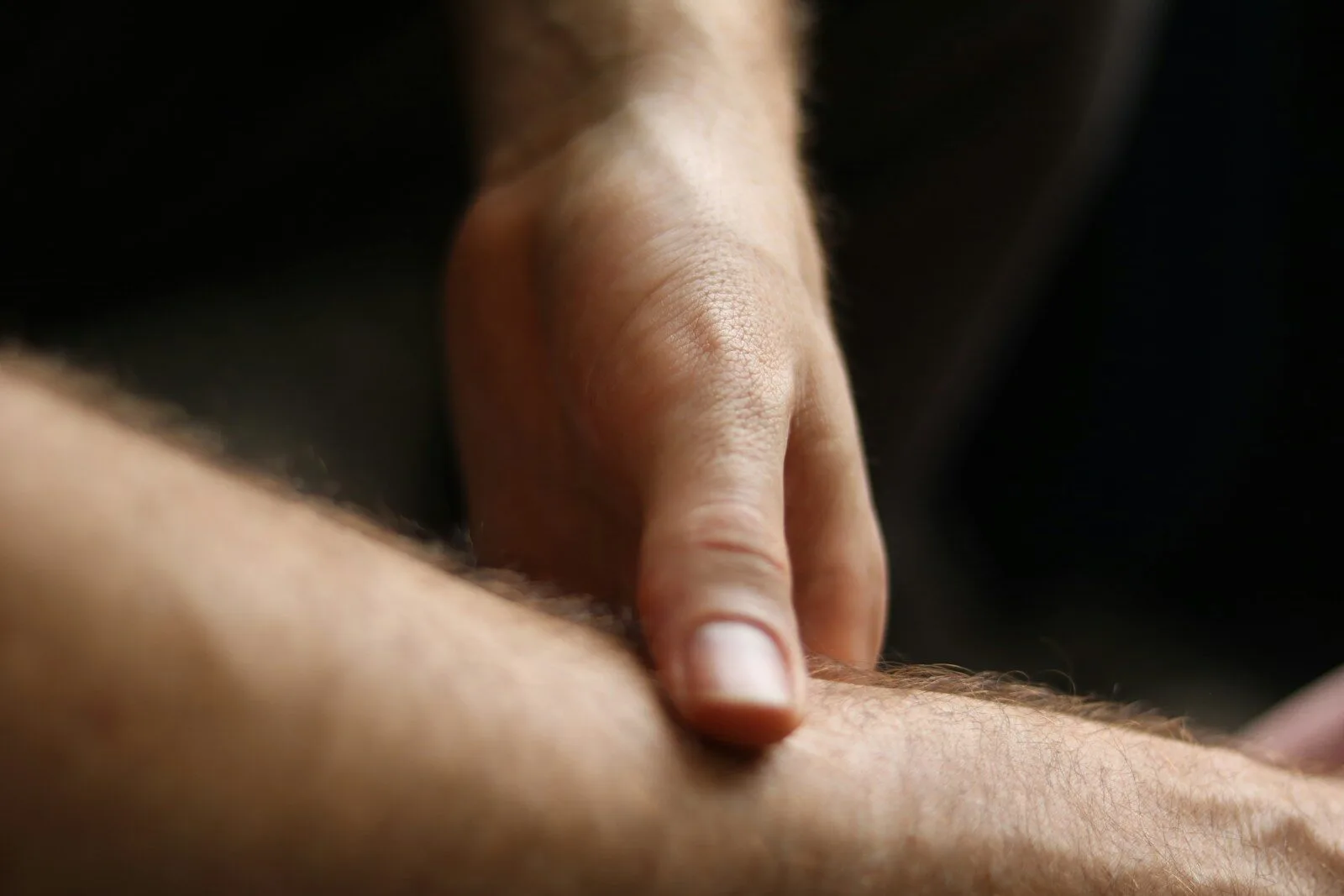
- Self-massage. Use your opposite hand’s thumb to roll along the forearm muscles, particularly any tender spots. Sustained pressure on a tender point for 30-60 seconds often releases it.
- Ice after activity, heat before. Ice for 10-15 minutes after a flare-up. Heat to loosen tight muscles before stretching.
- Modify the trigger. If mouse-and-keyboard work is the cause, take micro-breaks every 30 minutes. Lift mid-grip strength: a tennis ball squeeze for 10 reps every hour can help paradoxically.
- Rest the activity. Take 7-10 days off whatever’s aggravating it if you can. Most acute strain settles in that window.
When to see an RMT
Book an assessment if any of the following apply:
- Pain has been going on for more than 3 weeks despite rest and stretching
- The pain returns within days every time you go back to your normal activity
- You’re experiencing tingling, numbness, or weakness — these need proper assessment to rule out nerve involvement
- You can’t grip normally or pain is interfering with sleep
- You’ve already tried home care and want a structured plan
An RMT will assess the forearm, elbow, shoulder, and neck — most chronic forearm pain has contributors at all four levels. Treatment typically combines deep tissue work on the forearm muscles, trigger point release, and homework to address the underlying load pattern.
Forearm pain treatment in Edmonton
For repetitive strain forearm pain or tennis/golfer’s elbow, deep tissue massage is typically the right starting point. For pain combined with broader tension or workplace ergonomics issues, therapeutic massage covers the bigger picture.
Book at the location closest to you:
Most extended health benefit plans cover RMT sessions — see our direct billing page.
Frequently asked questions
What causes forearm pain without injury?
Most often repetitive strain from prolonged grip activity (typing, mouse use, phone scrolling, tools, racquet sports). Less common but possible: nerve compression (carpal tunnel, cervical radiculopathy), referred pain from the shoulder or neck, or systemic conditions. Pain without obvious cause that lasts more than a few weeks deserves an assessment.
How long does forearm pain take to heal?
Acute strains typically resolve in 1-3 weeks with rest and basic self-care. Repetitive strain pain that’s been building for months may take 6-8 weeks of treatment plus ergonomic/load changes. Tennis elbow and golfer’s elbow can run 3-6 months to fully resolve depending on severity.
Can massage help forearm pain?
Yes — for muscular and repetitive strain forearm pain, deep tissue massage on the flexors, extensors, and trigger points typically reduces pain quickly. For tennis or golfer’s elbow, massage helps but should be paired with eccentric strengthening exercises. For nerve-related pain, massage may help if the nerve is being compressed by tight muscles, but assessment first.
Should I stretch forearm pain?
Gentle stretching of both flexors (palm down, pull fingers back) and extensors (palm up, pull fingers down) helps most muscular forearm pain. Hold each stretch 30 seconds, repeat 2-3 times. Skip if stretching makes the pain sharper rather than easing it.
What’s the difference between tennis elbow and forearm strain?
Tennis elbow (lateral epicondylitis) is specifically tendinopathy at the outside of the elbow, with pain that radiates down the forearm from there. A general forearm strain is muscle injury along the forearm itself, without the bony tender point at the elbow. Treatment overlaps but tennis elbow needs more focus on the elbow attachment.
When is forearm pain serious?
Get medical assessment (not just RMT) if you have: sudden severe pain after trauma, visible deformity, loss of pulse or color in the hand, persistent numbness or weakness, or pain accompanied by chest pain or shortness of breath (which can be referred cardiac pain in some cases).
Get forearm and wrist tension treated with massage therapy in Edmonton at three clinics across the city.
Related Treatments & Conditions