
FAQ
Plantar Fasciitis Self-Massage: How Long to Roll, What to Use, and When It’s Not Enough
How to use a tennis ball or lacrosse ball for plantar fasciitis pain, and when self-massage isn't enough. Edmonton clinics.
You’ve heard the advice from a runner friend or a YouTube video: roll your foot on a tennis ball or a frozen water bottle for plantar fasciitis. Mostly good advice. But “roll a ball under your foot” leaves out a lot, how long to do it, when in the day, what kind of pressure, and what to do when it hurts more after rolling, not less. This guide covers all of it, plus when self-massage isn’t enough and you need an RMT to look at the foot properly.
Why self-massage helps plantar fasciitis
Plantar fasciitis is irritation of the plantar fascia, a thick band of connective tissue running from the heel to the base of the toes along the bottom of the foot. The pain is usually sharpest on the first few steps in the morning, eases as you warm up, then returns after long periods of standing or activity.
Self-massage helps in three ways:
- Local circulation. Rolling stimulates blood flow to the area, which supports tissue repair.
- Fascial release. The plantar fascia and connected calf muscles get gradual stretching and pressure relief.
- Trigger point reduction. Tender spots in the foot and calf muscles often hold tension that contributes to plantar fascia stress.
What it doesn’t do: address the upstream cause (calf tightness, weak foot intrinsics, footwear issues, gait problems, sudden mileage increases in runners). Self-massage manages symptoms; full resolution usually requires addressing why the fascia got irritated in the first place.
How to use a tennis ball for plantar fasciitis
- Sit in a chair with both feet flat on the floor.
- Place the tennis ball under the arch of the affected foot.
- Apply moderate pressure by pressing your foot down. The pressure should be firm enough to feel a “good hurt” but not sharp pain.
- Roll slowly from the heel to the base of the toes and back. Spend extra time on tender spots.
- Continue for 3–5 minutes per foot. Twice a day is plenty.
If a tennis ball isn’t firm enough, a lacrosse ball or massage ball provides deeper pressure. If it’s too intense, try a frozen water bottle, the cold doubles as ice therapy and the rounded shape rolls smoothly.
How long should you roll, and how often?
3–5 minutes per session, 1–2 times per day is the typical guidance. More isn’t better, over-rolling can irritate already inflamed tissue.
Best times:
- In the morning before standing up, warms up the fascia before the painful first steps
- After being on your feet for hours, releases accumulated tension
- Before bed, helps overnight recovery
Skip rolling immediately after running or intense activity, the tissue is already stressed and additional pressure can aggravate it. Give it 2-3 hours.
What if rolling makes it worse?
If pain is sharper after rolling rather than easier, three things to check:
- Pressure too deep. Back off to gentle pressure for a week.
- Rolling too long or too often. Cut to once a day, 2-3 minutes.
- Acute flare. If the fascia is acutely inflamed, ice + rest first, rolling later.
If symptoms keep worsening or rolling provokes a sharp pain, stop and book an assessment. There are conditions that mimic plantar fasciitis (tarsal tunnel syndrome, calcaneal stress fracture, fat pad atrophy) that need to be ruled out before continued self-treatment.
The other half: stretch and strengthen
Self-massage works best paired with these:
- Calf stretch. Lean against a wall, one leg back, heel down. Hold 30 seconds. Both straight-leg (gastrocnemius) and bent-knee (soleus) versions.
- Towel scrunches. Sit, place a towel on the floor, scrunch it toward you with your toes. Builds intrinsic foot strength.
- Heel raises. Slow heel raises (3 seconds up, 3 seconds down) progressively load the calf and plantar fascia. Start with 2 sets of 10, build up.
When to see an RMT
Book a session if:
- Pain has been going on more than 4-6 weeks despite consistent self-care
- The morning pain isn’t getting any better
- You’re a runner and want to keep training while you heal
- The pain is bilateral (both feet), often signals a load or footwear issue
- You’ve already tried good home care and want professional assessment
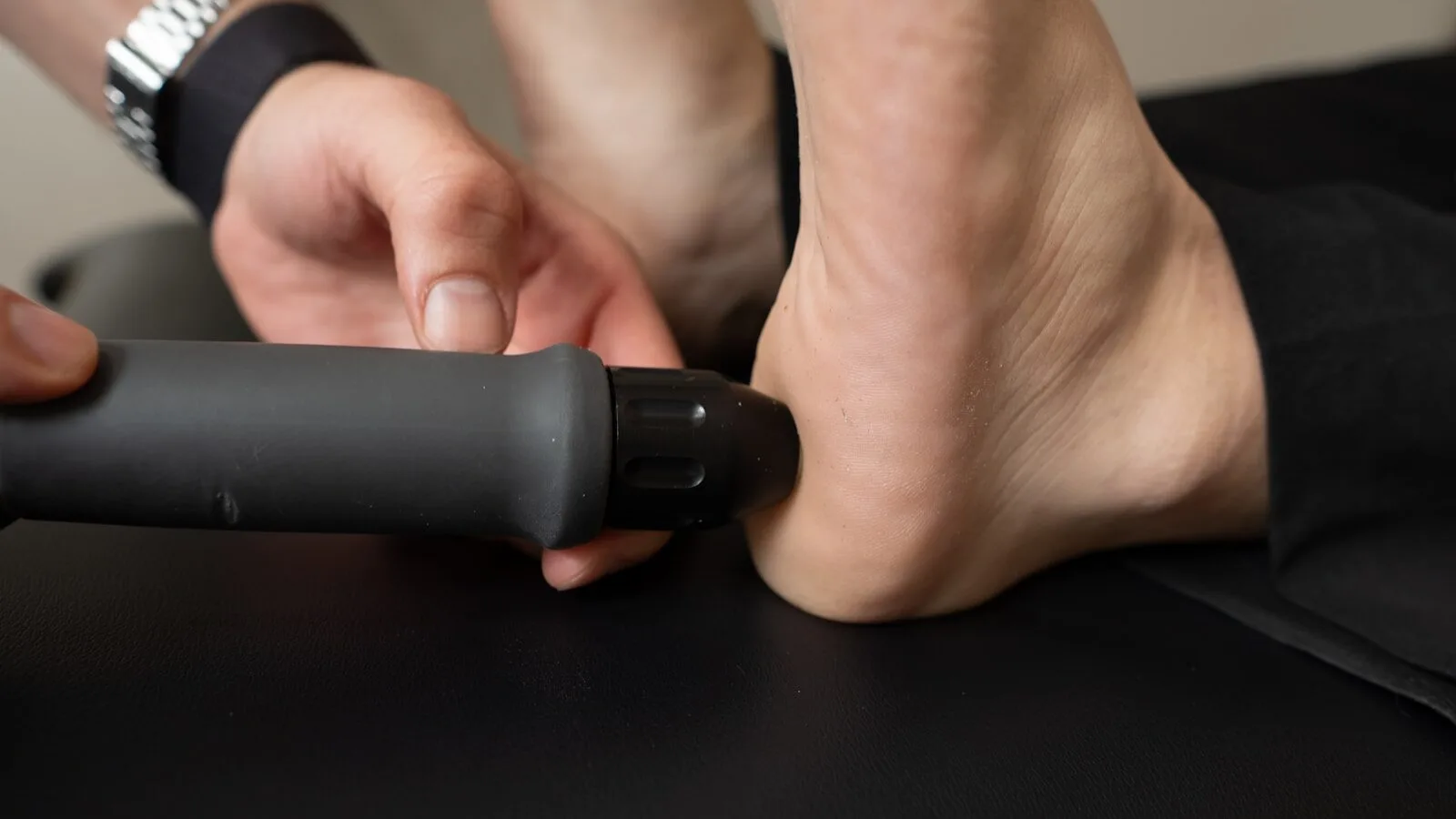
An RMT works deeper than self-massage can, treats the calf and posterior chain (which most home rolling doesn’t address), and can identify upstream contributors. Deep tissue massage at Athlete’s Choice is the typical starting point, our deep tissue page explicitly covers plantar fasciitis as a treatment focus. See our plantar fasciitis treatment page for the full approach, including shockwave therapy when the fascia has stopped responding to conservative care.
If plantar fasciitis has been present for 3 months or more and hasn’t responded to massage, shockwave therapy is the next step. It’s a non-invasive treatment that stimulates healing directly in tissue that has stopped repairing on its own, strong clinical evidence for chronic plantar fasciitis specifically.
Book at the location closest to you:
Most extended health plans cover RMT sessions, see our direct billing page.
Frequently asked questions
How long should I roll a tennis ball for plantar fasciitis?
3–5 minutes per foot, 1–2 times per day. More isn’t better, over-rolling can irritate already inflamed tissue. Best times are first thing in the morning and after long periods on your feet.
Tennis ball or lacrosse ball for plantar fasciitis?
Tennis ball if you’re starting out or sensitive, softer pressure. Lacrosse ball if a tennis ball doesn’t reach the tightness. A frozen water bottle is a third option that adds cold therapy to the rolling.
Why does it hurt more in my arch when rolling?
Either pressure too deep, rolling too long, or you’re rolling on actively inflamed tissue. Back off to gentle pressure, shorter sessions, and add icing. If sharp pain persists, stop self-treatment and get an assessment.
Can I roll both feet at once?
Sure, if both feet are affected, roll them simultaneously while seated. Just maintain even pressure on both.
Should I roll before or after running?
Before is fine, it warms up the fascia. Avoid rolling immediately after; the tissue is already stressed. Wait 2-3 hours post-run.
How long until self-massage shows results?
Most people notice some morning pain improvement within 1-2 weeks of consistent rolling and stretching. Full resolution often takes 6-12 weeks and usually requires addressing the upstream cause (calf tightness, footwear, training load, etc.), not just rolling.
Need hands-on help? Book massage in Edmonton at the clinic nearest you.
Related Treatments & Conditions