
Professional Massage Therapy
TMJ Massage Sherwood Park
Book NowRelieve jaw pain, tension, and headaches with TMJ massage in Sherwood Park near Millennium Place. Direct billing available at ACM. Book online.
Reduces jaw pain & clicking
Direct work on the masseter, pterygoids, and surrounding musculature relieves the tension driving TMJ dysfunction and joint noise.
Relieves headaches
TMJ-related tension is a primary driver of tension headaches and facial pain. Releasing the jaw complex often provides rapid relief.
Restores normal movement
Specific intraoral and extraoral techniques restore full, pain-free jaw opening and reduce clenching patterns.
The temporomandibular joint (TMJ) connects your lower jaw to the temporal bones on each side of your head. When healthy, it allows the jaw to move smoothly in all directions. For the estimated 12% of people who experience TMJ disorders, this joint becomes stiff and painful — often causing discomfort with eating, speaking, and yawning, along with referred pain into the neck, shoulders, and head. At our Sherwood Park clinic near Millennium Place, TMJ massage helps reduce pain, ease stiffness, restore jaw mobility, and address the surrounding muscle tension that contributes to ongoing symptoms.
When jaw pain needs urgent care first
In rare cases, jaw and facial pain signals something more serious. If your jaw pain comes with chest tightness, arm pain, shortness of breath, or sudden sweating — particularly in women, who more often experience cardiac symptoms as jaw, neck, or shoulder discomfort rather than classic chest pain — seek emergency care before booking a massage.
Which muscles your RMT targets
Most general massage never touches the muscles actually driving TMJ pain. Your Sherwood Park RMT works directly on the masseter (your main chewing muscle), the temporalis, and the pterygoids — including optional, consented intraoral work on the medial pterygoid — alongside the upper cervical and suboccipital muscles that almost always co-present with TMJ patterns. Bruxism (teeth grinding or clenching, often during sleep) is one of the most common drivers, along with stress-related jaw bracing, whiplash, dental work, and repetitive strain. Massage addresses the muscular component; structural or bite-related causes are best managed alongside dental or orthodontic care.
What to Expect During Your TMJ Massage Appointment
If you’re experiencing jaw pain, stiffness, clicking or popping in the jaw, headaches, earaches, dizziness, or tension in the neck and shoulders related to TMJ disorder or bruxism (teeth grinding), TMJ massage may be the right treatment.
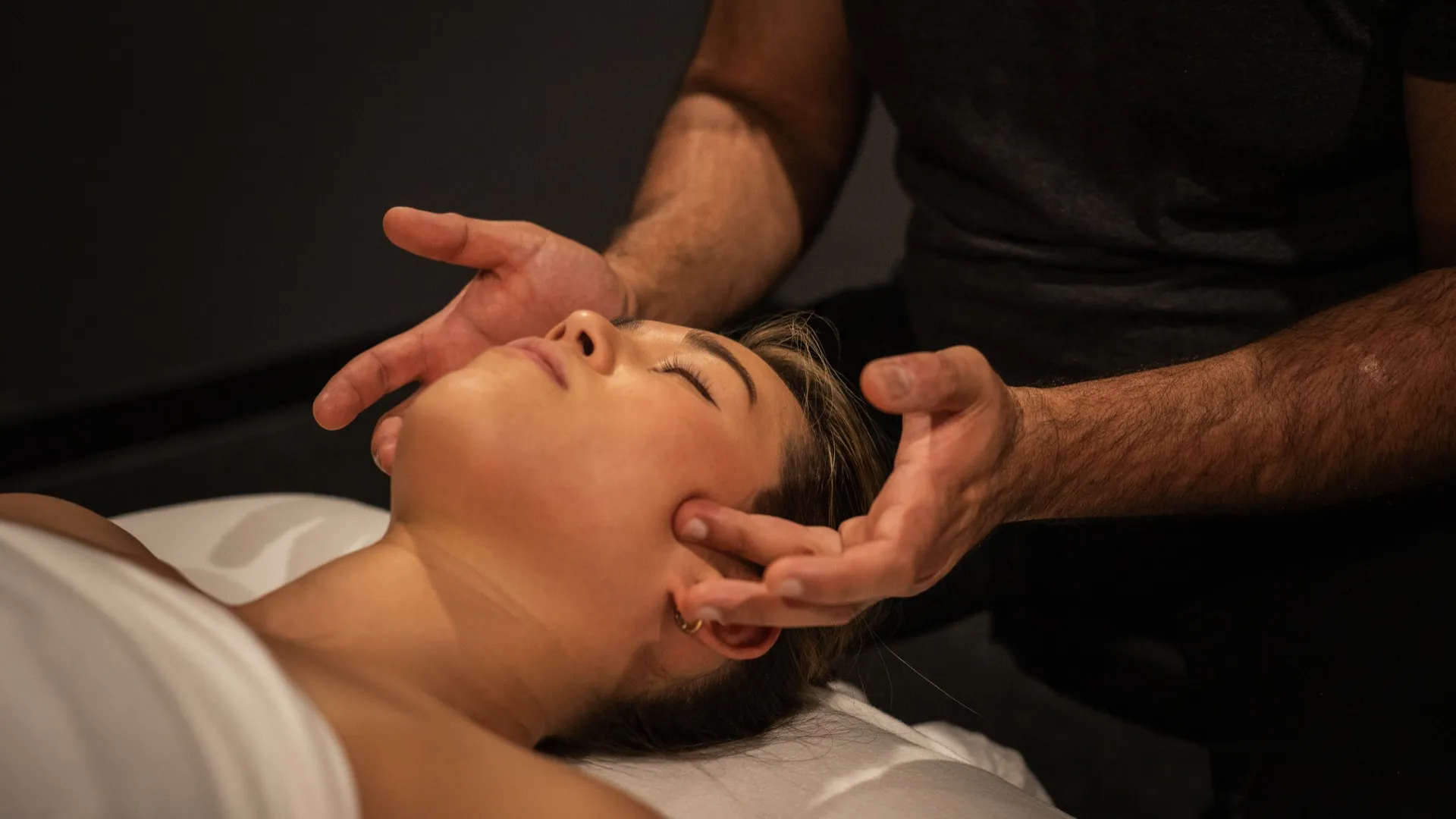
Your appointment will begin with a short assessment, which may include range of motion and strength testing. Your therapist will review your health history, current symptoms, and contributing lifestyle factors. Treatment focuses on the muscles surrounding the temporomandibular joint — including the jaw, neck, shoulders, and face. With gloved hands, your therapist may also work inside and outside the mouth to release tension directly at the joint.
A common technique used is myofascial release (MFR), which applies gentle, sustained pressure to release trigger points and ease muscle tightness. Some tenderness may occur in tight areas — let your therapist know how you’re feeling throughout so they can adjust.
After your session, your therapist may advise avoiding hard or chewy foods, practicing good posture, and limiting excessive jaw movements to support recovery. Personalized aftercare tips will help manage symptoms and prevent flare-ups. Follow-up sessions may be recommended for ongoing management of chronic tension or grinding.
Book TMJ Massage at Your Sherwood Park Location
TMJ massage is available at our Sherwood Park clinic at 2457 Broadmoor Blvd #114. Direct billing to most major insurers. Same-day appointments are often available — book online or call 780-433-0550.
Frequently Asked Questions
How many sessions of TMJ massage will I need?
For mild or recent-onset jaw tension, 2–3 sessions often provide lasting relief. For chronic TMJ dysfunction or bruxism-related patterns, most clients benefit from 4–6 sessions to start, then maintenance every 4–6 weeks. Your Sherwood Park RMT will give a specific recommendation after your first-session assessment.
Is TMJ massage covered by insurance in Alberta?
Yes — RMT services are covered under most Alberta extended health plans, including Sun Life, Canada Life, Manulife, Green Shield, and Blue Cross. The service is billed as massage therapy, and our Sherwood Park clinic offers direct billing so you don’t need to submit claims manually.
What’s the difference between TMJ massage and seeing a dentist or physiotherapist?
A dentist addresses structural and bite-related factors such as night guards and bite adjustment. A physiotherapist may use joint mobilization and exercise. An RMT focuses on the muscular component — releasing the overloaded muscles driving jaw tension and pain. For most people the best outcomes come from a combination, and massage is especially effective when clenching and muscular tension are the primary drivers.
Does TMJ massage hurt?
The jaw muscles are often surprisingly tender when first worked on — most clients have never had targeted work on the masseter, so the first session can be intense. A good RMT works within your pressure tolerance and checks in throughout, and intraoral techniques are always optional. Mild soreness for about 24 hours is normal; lasting discomfort should be flagged to your therapist.
Can I do anything at home between sessions?
Yes. Your RMT will give you specific home care, but common recommendations include applying heat to the jaw (10–15 minutes, indirect contact), gentle jaw-opening stretches, daytime clenching awareness, and temporarily softening your diet to reduce jaw load. Avoid ice on the jaw — heat is almost always more appropriate for muscular TMJ tension.
What to know
Before Your Visit
Arrive Early
A few minutes before your appointment lets you complete paperwork and settle in before treatment begins.
Eat Light
Avoid heavy meals for 1–2 hours beforehand. A light snack is fine — an empty stomach can cause lightheadedness.
Stay Hydrated
Drink water before and after. Hydration helps flush out waste released during treatment and reduces post-session soreness.
Dress Comfortably
Wear loose-fitting or athletic clothing that allows free movement. Your therapist will advise on draping based on your treatment.
Communicate
Share your concerns, injuries, and goals before the session starts — and keep the dialogue open throughout so adjustments can be made in real time.
Rest After
Skip intense activity after your session and give your body time to integrate the treatment.
Follow Aftercare
Your therapist may prescribe specific stretches, exercises, or self-care strategies. Following through ensures the best long-term results.
Medical Clearance
If you are pregnant, undergoing cancer treatment, or recently injured, consult your healthcare provider before booking. Your safety comes first.
What we treat
Conditions
We Treat
Most of our clients aren't athletes. They're people with persistent pain who've tried stretching and rolling and want something that actually works. If your condition isn't listed, call us — your therapist will assess at your first visit.
Book Your AssessmentGoogle reviews
What Our Clients Say
"I had an excellent experience with my massage therapist Ece Taylan. She created a calm, welcoming atmosphere that immediately put me at ease and the treatment was exceptional."
Seray
Google Review
"Marisol is truly an exceptional massage therapist! She made me feel comfortable, welcomed, and completely cared for. I left feeling lighter, relaxed, and with improved mobility."
Lesley Turnbull
Google Review
"Rebecca is very knowledgeable and caring. She takes the time to listen to your concerns and offers a great treatment plan. She has a great touch."
Tara Gamble
Google Review
"Tanya D. is amazing!! I've had chronic neck/back issues for close to 20 years, and have never had the type of relief as I've had since seeing her over the past year."
Kaila Tipton
Google Review
Got questions?
FAQ
What causes TMJ dysfunction?
Common causes include teeth grinding or clenching (bruxism), stress, dental misalignment, jaw injury, and postural issues in the neck and upper back. Often multiple factors are present simultaneously.
Does TMJ massage involve work inside the mouth?
It can. Intraoral massage accesses the medial pterygoid and other deep jaw muscles that can't be reached from outside. It's always explained and consented before the therapist proceeds — you're in control at every step.
How many sessions does it typically take?
Many clients notice meaningful improvement after 2–3 sessions. Chronic or longstanding TMJ issues may require 4–6 sessions for sustained results. Your therapist will track your progress and adjust the plan accordingly.
Should I see a dentist or a massage therapist for TMJ?
Both are often beneficial. A dentist can assess dental occlusion and recommend a night guard if bruxism is a factor. Massage therapy addresses the muscular and myofascial component of TMJ dysfunction. Many clients benefit from both working together.