
FAQ
Kinesiology Taping for Hip Pain: How It Works, When to Use It, and Why Taping Alone Isn’t the Fix
How kinesiology taping works for hip pain, when to tape vs treat the cause, and how Edmonton RMTs at Athlete's Choice Massage use it in treatment sessions.
If you’ve watched any high-level athletics in the last decade, you’ve seen the colorful tape, usually pink, blue, or black, running across hips, knees, shoulders, and shins. Kinesiology tape is everywhere. It’s also widely misunderstood. This guide breaks down what KT tape actually does for hip pain, when it helps, when it doesn’t, how to apply it for the most common hip issues, and why the tape works best when it’s part of a treatment plan rather than a standalone fix.
What kinesiology tape actually does
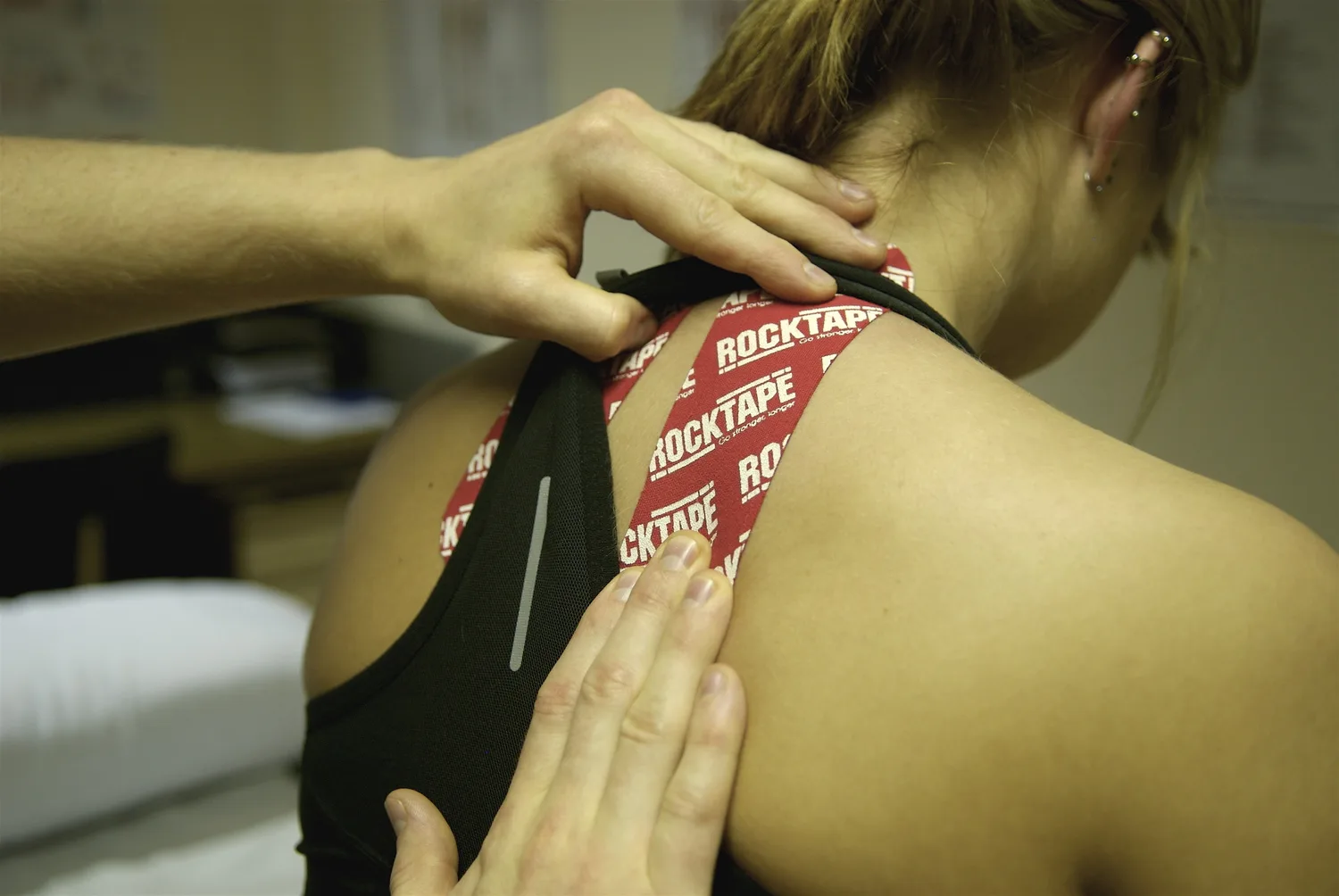
Kinesiology tape (KT tape, kinesio tape, “k-tape”) is an elastic cotton-and-nylon strip with an acrylic adhesive. When applied with the right tension across a muscle or joint, it produces three effects:
Sensory feedback. The tape lifts the skin slightly, giving your nervous system constant proprioceptive input about where that body part is in space. For an irritated hip, this can reduce protective guarding and improve movement quality.
Decompression at the skin layer. That subtle skin lift creates microscopic space between skin and underlying tissue, which some research suggests helps reduce local inflammation and improve blood and lymphatic flow.
Light support without restriction. Unlike rigid athletic tape, KT tape allows full range of motion. It cues the muscle without locking it down, useful when the goal is to keep moving rather than immobilize.
What it does NOT do: provide structural support like a brace, “fix” muscle imbalances, replace strength training, or treat underlying joint pathology. It’s a complement to a treatment plan, not a substitute for one.
When kinesiology taping helps hip pain
KT tape is most useful for hip pain when:
- The pain is muscular (glute medius weakness, IT band tightness, hip flexor strain) rather than structural
- You’re returning to activity after an acute flare-up and want extra proprioceptive cueing
- You need to get through a specific event (a long run, a tournament, a workday on your feet) while continuing rehab
- You’re addressing the underlying cause in parallel, through massage therapy, strength work, or physiotherapy
KT tape is less useful (or actively misleading) when:
- Hip pain is structural (labral tear, hip impingement, severe arthritis), taping over real joint damage masks symptoms without addressing cause
- You’re using it as the only intervention and not addressing why the pain exists
- The skin underneath is broken, infected, or reactive
How to tape hip flexor pain at home
If your hip flexor (front-of-hip) is tight or strained, common in runners, cyclists, and desk-bound office workers, a basic application:
- Lie on your back with your hip extended. If you can, hang the leg slightly off a bench or bed for a small stretch.
- Cut a strip of KT tape about 8–10 inches long. Round the corners (prevents the edges from peeling).
- Anchor the first inch on the front of the upper thigh, just above the knee, with no tension.
- Apply the middle section with light tension (about 25%) up over the front of the hip.
- Anchor the last inch on the lower abdomen, again with no tension.
- Rub the tape to activate the adhesive.
Tape can stay on for 3–5 days. Remove gently in the direction of hair growth, and skip reapplication if skin shows redness or irritation.
How to tape outer hip pain (gluteus medius / IT band)
For pain on the outer side of the hip, common in runners, sometimes called “lateral hip pain”:
- Stand or kneel with the hip you’re taping in slight adduction (knee crossed over).
- Cut a strip of tape about 8 inches long. Round the corners.
- Anchor the first inch on the side of the upper thigh.
- Apply with light tension (25%) up along the outer hip toward the iliac crest (the bony top of the pelvis).
- Anchor the last inch on the side of the upper buttock, no tension.
- Rub to activate.
This cues the gluteus medius and provides proprioceptive feedback during loading activities like walking, running, or stairs.
When tape isn’t enough
Most people taping their hip at home are doing it because the pain has been sticking around for weeks or returns whenever they push activity. That pattern is the body telling you something needs assessment, not just decoration.
Common underlying causes that taping won’t fix:
- Glute medius weakness or inhibition, the muscle isn’t firing properly. Needs activation work and progressive strengthening.
- Hip flexor tightness from prolonged sitting, needs targeted soft tissue work and a mobility routine.
- IT band tension, almost always referred from glute and TFL dysfunction further up the chain.
- Hip impingement or labral issues, structural and require imaging plus a physiotherapist or sports medicine doctor.
- Sacroiliac joint dysfunction, often presents as outer hip pain but originates at the SI joint.
A trained RMT can assess which of these is in play and treat the soft tissue contributors. A physiotherapist or sports medicine doctor handles the structural workup if imaging is warranted.
Kinesiology taping at Athlete’s Choice
We use kinesiology taping as part of treatment sessions where it fits the case, not as a standalone service. The most common workflow:
- Initial assessment during your first session, your RMT identifies what’s actually driving the hip pain
- Soft tissue treatment of the contributing muscles (glutes, hip flexors, IT band, lower back as needed)
- Tape application at the end of the session, with cueing for movement patterns to focus on between visits
- Self-care recommendations, stretches, activations, or strength work to address the underlying cause
For sport-specific hip pain (running, cycling, lifting), sport massage is the right fit. For chronic, postural, or work-related hip pain, therapeutic massage is the better starting point.
Book at the location closest to you:
Most extended health benefit plans cover RMT sessions including any taping done as part of treatment, see our direct billing page for current providers.
Frequently asked questions
Does kinesiology tape really help hip pain?
For muscular hip pain, particularly glute medius weakness, IT band tightness, or hip flexor strain, KT tape can reduce protective guarding, improve proprioception, and let you keep moving while you address the underlying cause. It doesn’t help structural hip pain (labral tears, severe arthritis).
How long can I wear KT tape on my hip?
3–5 days is standard. The tape is designed to stay on through showers and exercise. Remove gently in the direction of hair growth. Skip reapplication if skin shows redness, itching, or irritation.
Can I tape my own hip at home?
Yes for basic applications, especially hip flexor or outer hip pain. The taping itself is straightforward, what’s harder is knowing whether tape is the right intervention for what you’re feeling. If pain is recurrent or has been going on more than 2–3 weeks, get an assessment first.
Will kinesiology tape fix my hip pain?
No. Tape provides sensory cueing and mild support, it doesn’t strengthen weak muscles, lengthen tight ones, or repair joint structures. Use it as part of a treatment plan that addresses why the pain is there in the first place.
What’s the difference between KT tape and athletic tape?
KT tape is elastic and allows full range of motion, it cues movement rather than restricting it. Athletic tape is rigid and provides structural restriction (e.g. taping an ankle to limit inversion). Different tools for different purposes.
Does insurance cover kinesiology taping?
Standalone taping isn’t typically covered, but taping done as part of an RMT treatment session is included in your massage therapy benefit. Coverage varies, check your plan and ask the clinic before booking.
Can I run or work out with KT tape on?
Yes, that’s part of why it’s designed to allow full motion. Many athletes train and compete with tape on. Just monitor for skin reactions and remove if redness develops.
Book taping and treatment at our Edmonton massage clinics, choose the location nearest you.
Related Treatments & Conditions