
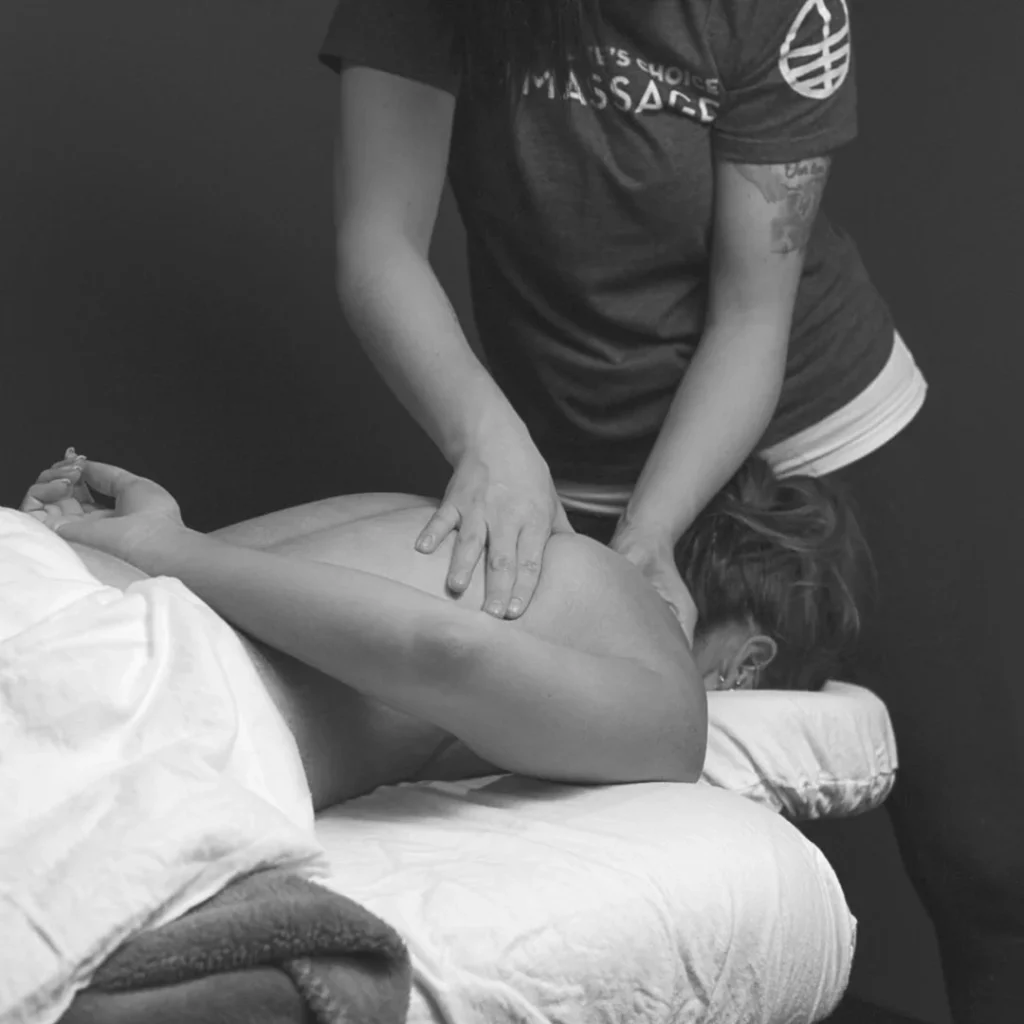
Professional Massage Therapy
Relaxation Massage Edmonton
Book NowRelaxation and Swedish massage in Edmonton for stress and muscle tension. Registered massage therapists at three clinics, direct billing. Book online.
Registered therapists
All treatments are delivered by Registered Massage Therapists (RMTs) trained to clinical standards.
Personalized treatment
Every session starts with an assessment of your specific concerns, no generic routines.
Direct billing available
We direct-bill most major insurance providers so you can focus on your recovery, not the paperwork.
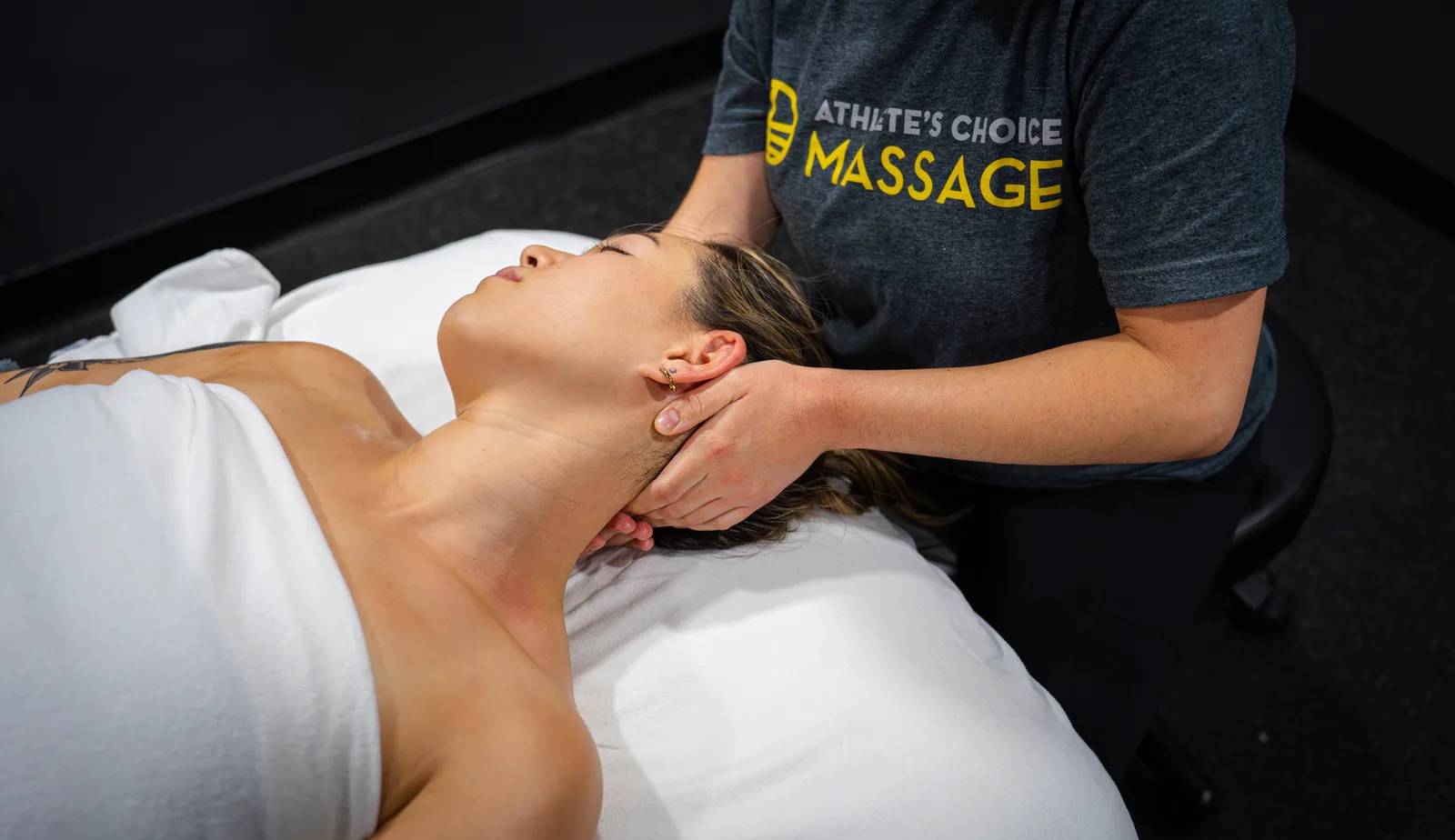
Relaxation massage in Edmonton, also called Swedish massage, is a full-body treatment using long, flowing strokes and light to moderate pressure to settle the nervous system and ease general muscle tension. Athlete’s Choice Massage offers it at three Edmonton clinics, delivered by Registered Massage Therapists, with direct billing to most major insurers.
45 min | 60 min | 75 min | 90 min | 120 min
Where to book in Edmonton
Three clinics across the city, open seven days a week:
- South Edmonton: on 67 Ave NW, serving south Edmonton and the university area.
- Downtown Edmonton: 108 Street near Jasper Avenue. The most common lunch-hour and after-work booking.
- West Edmonton: a few minutes from West Edmonton Mall and Stony Plain Road, with free parking.
Outside the city? Relaxation massage is also available at our Sherwood Park clinic on Broadmoor Blvd.
What your Edmonton relaxation massage session looks like
Your RMT starts with a short conversation: how you’re sleeping, where you’re holding stress, anything you’d rather they avoid. There’s no orthopedic testing and no treatment plan, because that isn’t the point of this session.
Then you undress to your comfort level, lie under the linens in a private treatment room, and your therapist works steadily through the whole body: back, shoulders, neck, arms, legs, feet. Pressure stays light to moderate. They’ll check in once or twice; say something if you want more or less.
You’ll leave loose and slightly slow. Drink water, avoid anything demanding for the rest of the day, and plan on sleeping well. Unlike deep tissue massage in Edmonton, relaxation work rarely leaves you sore the next morning.
What is Swedish massage?
Swedish massage is the technique. Relaxation massage is what most people call it when they book. Same thing.
It’s built on five strokes:
- Effleurage, long gliding passes that warm the tissue and set the rhythm of the session
- Petrissage, kneading and lifting, the part that feels like the tension is being wrung out
- Friction, smaller circular work into a tight spot
- Tapotement, rhythmic tapping or cupping, used sparingly
- Vibration, light shaking to release a muscle that won’t let go
Your RMT won’t announce which one they’re doing. But if you’ve ever wondered why a good massage has a shape to it, building, working, settling, that’s why.
Does relaxation massage help muscle knots?
It helps. It’s not the fastest tool.
A muscle knot, properly, a trigger point, is a small band of muscle fibres stuck in a contracted state, often tender, sometimes referring pain elsewhere. Relaxation massage improves circulation to the area and reduces the protective guarding that keeps the knot locked. Soft tissue that’s warmer and less defensive is easier to release.
But a trigger point that’s been sitting in your upper trap since March usually needs someone to put sustained, specific pressure into it. That’s deep tissue or therapeutic massage territory. Book relaxation for the whole-body reset; book targeted work for the knot.
Relaxation massage and training recovery
If you train, this session earns its place differently. Hard weeks leave you tight everywhere rather than injured anywhere: shoulders that will not settle, legs that feel heavy on an easy run, sleep that stops doing its job. That is a nervous system that has not downshifted, and it is what relaxation massage is for.
Booked between hard blocks, it improves circulation, reduces the general guarding that follows heavy training, and helps you sleep, which is where most of the actual recovery happens. It will not fix a strained hamstring. Book sports massage in Edmonton for that. But a standing relaxation appointment through a heavy training block keeps the baseline low, so the targeted work has less to undo.
Runners in a marathon build-up and lifters mid-programme tend to get the most from it, usually every two to three weeks.
Should you book relaxation or something else?
Be honest about why you’re booking.
If you’re stressed, run down, sleeping badly, and generally tight with no single complaint, relaxation massage is the right call. If you have a specific problem area, a nagging injury, or pain that’s been building for months, you’ll get more out of deep tissue massage or therapeutic massage in Edmonton, where your RMT assesses first and builds the treatment around the finding.
Many clients run both: therapeutic work when something flares, relaxation massage in between to keep the baseline low. Our therapeutic vs. relaxation comparison goes deeper if you want to think it through before you book.
Massage supports stress recovery and general muscle tension. It doesn’t treat anxiety disorders or replace medical care. It works alongside them. If stress is the main reason you’re booking, our page on massage for stress and anxiety in Edmonton is a useful companion read.
Relaxation massage is one of several treatments at our massage clinics across Edmonton. If you would rather start with targeted work, see therapeutic massage in Edmonton, or meet the RMTs who’ll be treating you.
What to know
Before Your Visit
Arrive Early
A few minutes before your appointment lets you complete paperwork and settle in before treatment begins.
Eat Light
Avoid heavy meals for 1–2 hours beforehand. A light snack is fine, an empty stomach can cause lightheadedness.
Stay Hydrated
Drink water before and after. Hydration helps flush out waste released during treatment and reduces post-session soreness.
Dress Comfortably
Wear loose-fitting or athletic clothing that allows free movement. Your therapist will advise on draping based on your treatment.
Communicate
Share your concerns, injuries, and goals before the session starts, and keep the dialogue open throughout so adjustments can be made in real time.
Rest After
Skip intense activity after your session and give your body time to integrate the treatment.
Follow Aftercare
Your therapist may prescribe specific stretches, exercises, or self-care strategies. Following through ensures the best long-term results.
Medical Clearance
If you are pregnant, undergoing cancer treatment, or recently injured, consult your healthcare provider before booking. Your safety comes first.
What we treat
Conditions
We Treat
Most of our clients aren't athletes. They're people with persistent pain who've tried stretching and rolling and want something that actually works. If your condition isn't listed, call us, your therapist will assess at your first visit.
Book Your AssessmentGoogle reviews
What Our Clients Say
"I had an excellent experience with my massage therapist Ece Taylan. She created a calm, welcoming atmosphere that immediately put me at ease and the treatment was exceptional."
Seray
Google Review
"Marisol is truly an exceptional massage therapist! She made me feel comfortable, welcomed, and completely cared for. I left feeling lighter, relaxed, and with improved mobility."
Lesley Turnbull
Google Review
"Rebecca is very knowledgeable and caring. She takes the time to listen to your concerns and offers a great treatment plan. She has a great touch."
Tara Gamble
Google Review
"Tanya D. is amazing!! I've had chronic neck/back issues for close to 20 years, and have never had the type of relief as I've had since seeing her over the past year."
Kaila Tipton
Google Review
Got questions?
FAQ
Where can I get a relaxation massage in Edmonton?
Athlete's Choice Massage offers relaxation massage at three Edmonton clinics: South Edmonton near Whyte Avenue, Downtown on 108 Street near Jasper Avenue, and West Edmonton a few minutes from West Edmonton Mall and Stony Plain Road. All treatments are delivered by Registered Massage Therapists and the clinics are open seven days a week.
Is relaxation massage the same as Swedish massage in Edmonton?
Yes. Swedish massage is the technique and relaxation massage is the common name for it. Booking a relaxation massage at any Edmonton Athlete's Choice Massage clinic gets you a Swedish-style full-body session using long, flowing strokes and light to moderate pressure.
How much does a relaxation massage cost in Edmonton?
Pricing depends on session length, which ranges from 45 to 120 minutes. Current rates are shown at checkout when you book online. If your extended health plan covers massage therapy by a Registered Massage Therapist, Athlete's Choice Massage direct bills most major insurers so many clients pay little or nothing out of pocket.
Do I need a referral for a relaxation massage in Edmonton?
No referral is needed to book. Some extended health plans require a doctor's note before they will reimburse massage therapy, so check your specific policy. Booking itself is direct: online or by phone at 780-433-0550.
Can I book a relaxation massage on the same day in Edmonton?
Often, yes. The three Edmonton clinics are open seven days a week and same-day appointments are frequently available, particularly at Downtown and West Edmonton. Live availability is shown when you book online.